Manual.ly Logo

Moldex Series 9000 EasyLock Manuale

0,0 · 0 Valutazioni

Manuale PDF · 44 Pagine

Italiano

M: QW-35-FL
pagina

/ 44

Loading...
4059dcbd114d49994f910f96f037830bf142 page 5
3
GB – Instructions for Series 9000 Masks
Important Information for Users
This manual is only valid in conjunction with the instruction manual for Moldex Series
7000/9000 gas and particulate filters. Failure to comply with these instructions on
how to use the product and failure to wear the respiratory protection in the polluted
area may negatively impact on the health of the user and lead to permanent damage
and life-threatening injuries.
• This breathing apparatus does not supply oxygen (02) • Only use the product in ad
-
equately ventilated areas,(19.5 Vol.-% oxygen) • The mask and filters must be selected
in accordance with the pollutant type and concentration (see Table 2). • In the case
of gases with insufficient warning properties, filters may only be used if special usage
policies are specified for this purpose. • If the conditions are uncertain or changeable,
self-contained breathing apparatus must be worn. • You must exit the working area
and replace the respirator mask immediately if: – the mask is damaged, – you expe
-
rience difficulty in breathing, – you experience dizziness or fatigue. – you can taste
or smell hazardous substances or if you experience irritation • Read the instruction
manual before using the mask. • The product does not contain any metallic parts that
could cause ignition in potentially explosive atmospheres. • If you have any questions
about how to use the product, please contact Moldex-Metric. • You must also observe
the relevant rules and regulations when using respiratory equipment. • Under certain
circumstances, persons with beards, long sideburns or other anomalies in the area
around the sealing lines may be unable to achieve a proper sealing fit. Spectacle
frames that extend under the sealing line will impede a proper sealing fit. • The masks
must not be modified in any way. • Users of the masks and filters must be familiar with
how to handle them correctly. • When not in use, the mask and filter must be stored in
an uncontaminated environment.
Caution: Do not use filter equipment in unventilated containers and confined spaces.
Preparations Before Using the Full-mask
The full-mask must always be checked before use. Do not use a damaged or defective
mask. Seek the immediate assistance of a supervisor.
You must check • The mask and the filters for fractures, deformations, cracks and
contamination. • Whether the head strap is torn, nicked or damaged in any other way
and whether it provides sufficient elasticity. • The inhalation and exhalation valves
as well as the sealing rings on the filter connections for contamination, deformation,
fractures and cracks. Make sure that the valves and sealing rings are fitted correctly. •
The use-by-date of the filter and their correct fitting in accordance with the instruction
manual for gas and particulate filters. Fitting/removing the full-mask (Figures 1, 2, 3
and 4) Open the straps fully at the 4 adjustment points and hold the head strap with
one hand at the bracing with the Moldex lettering. Place the opening of the head strap
at the back of the neck and pull the mask down over your face from above. At this point,
make sure that no hairs are trapped between the sealing lip and your face. Position
the mask on your face and use one hand to press the mask firmly against your mouth
and chin. Now use your other hand to pull the neck strap tight on one side and then
repeat the procedure on the other side. To ensure the best possible seal between mask
and face, you should always tighten the neck straps first. The head strap must lie flat
on your head. To ensure that the mask fits comfortably, adjust the head and neck strap
equally. Before entering your working area, check that the mask creates a seal around
the face. To remove the mask, first loosen the clips on the neck strap by pulling the mask
away from your face. Using suction to check the face seal (Figure 5) Place the palm
of your hand over the opening on the filter cover to seal it and breathe in slowly. If the
facepiece contracts slightly, the mask is correctly seated. If you notice an inflow of air,
adjust the position of the mask on your face or adjust the tension of the straps. Repeat
this check until a seal is achieved. Using excess pressure to check the face seal (Figure
6) For full-masks equipped with an EN 148-1 connection, check the face seal before
fitting the filter to the facepiece. Place the palm of your hand over the exhalation valve
and breathe out slowly. If no air escapes between the facepiece and your face, a prop
-
er sealing fit is achieved. If you notice air escaping, adjust the position of the mask on
your face or adjust the tension of the straps. Repeat this check until a seal is achieved.
Under no circumstances should you enter a hazardous area if you are unable to
achieve a proper sealing fit. Seek the assistance of a supervisor.
Maintaining the Full-mask
The maintenance intervals as set out in the national regulations must be adhered to.
The date of manufacture is shown on the inside of the face seal in the chin area.
Cleaning/Disinfection We recommend cleaning the mask after each use. If not in use,
clean the mask after 6 months at the latest. Remove the filter; clean the facepiece
with warm water (max. 50°C). If necessary, use a neutral cleaning agent and an
alcohol-based disinfectant. To clean the valve membrane, remove it from the holder.
To clean the inner mask, unfasten it from the two stop points. To refit it, use the guide
rails on the lower part of the lens and the two stop points. To dismantle the filter, refer
to the instruction manual for gas and particulate filters. After having cleaned or disin
-
fected the mask, the face seal needs to be checked by means of suitable leak testing
equipment. Before cleaning pull the protective film away from the lens Dry the mask
thoroughly before putting on a new protective film and before storing it. Storage Keep
the 9000 mask sealed in a dry, uncontaminated environment. Protect against sunlight
and sources of heat (see the "Storage" icons). The name of the wearer and a record
of the filter changes can be noted on the packaging. Caution: At low temperatures,
moisture can cause the valves to freeze up. The date of manufacture is engraved on
the inside of the mask. Calendar clocks see page 39. Exhalation Valve (Spare Part
No. 9974 [b]) Fold down the cover of the exhalation valve and check the exhalation
valve and valve seat for contamination, deformation, fractures or cracks. Replace the
valve membrane when necessary, or every 4 years at the latest. Please note date of
replacement. Inhalation Valve (Spare Part No. 9974 [a]) Check the inhalation valve
on the inner mask and on the inside of the filter connection for contamination, defor
-

Chatta con il manuale del tuo Moldex Series 9000 EasyLock utilizzando l'IA

Ottieni risposte istantanee dall'IA dal manuale del tuo Moldex Series 9000 EasyLock

Chiedi qualsiasi cosa sul Moldex Series 9000 EasyLock. Le risposte provengono da questo manuale, con le pagine di riferimento.

Series 9000 EasyLock Programma di manutenzione

Ricordami quando e' necessaria la manutenzione
Ogni 6 mesi
Pulire la maschera non utilizzata

Se non in uso, pulire la maschera almeno ogni 6 mesi per garantire igiene e funzionalita.

Mostra nel manuale (pagina 5)
Ogni 4 anni
Sostituire la membrana della valvola di espirazione

Sostituire la membrana della valvola di espirazione quando necessario, o al massimo ogni 4 anni. Registrare la data di sostituzione.

Mostra nel manuale (pagina 5)
Dopo ogni utilizzo
Pulire e disinfettare la maschera

Rimuovere i filtri e pulire il facciale con acqua tiepida (max 50°C). Utilizzare un detergente neutro/disinfettante alcolico se necessario. Controllare la tenuta dopo la pulizia.

Mostra nel manuale (pagina 5)
Prima di ogni utilizzo
Ispezionare la maschera e le valvole

Controllare maschera, filtri, cinghie per la testa, valvole di inspirazione/espirazione e anelli di tenuta per danni, contaminazioni o deformazioni prima dell'uso.

Mostra nel manuale (pagina 5)

Promemoria di manutenzione gratuiti

In base alla data di acquisto. Sempre gratuito, annulla l'iscrizione in qualsiasi momento.

Inviando, accetti l'informativa sulla privacy. Puoi annullare l'iscrizione con un clic in qualsiasi email.
M: qwen/qwen3.8-flash

Fai una Domanda

0/1000

Consigli Series 9000 EasyLock?

Sì No

Domande frequenti

A

No, este aparato respiratorio no suministra oxígeno. Está estrictamente destinado para su uso en áreas con ventilación adecuada que contenga al menos un 19.5% de volumen de oxígeno.

Questa risposta è utile?

A

Se recomienda limpiar la mascarilla después de cada uso. Si no se usa, debe limpiarse al menos cada seis meses para prevenir la acumulación de contaminación.

Questa risposta è utile?

A

Las monturas de las gafas que se extienden bajo la línea de sellado impedirán un ajuste de sellado adecuado. Puede usar el soporte de gafas opcional, pero asegúrese de que la montura no rompa el sello.

Questa risposta è utile?

A

Debe abandonar el área de trabajo inmediatamente y reemplazar la mascarilla respiratoria. Oler o saborear sustancias peligrosas indica una ruptura en el sello o la saturación del filtro.

Questa risposta è utile?

A

Sí, el producto no contiene ninguna parte metálica que pueda causar ignición en atmósferas potencialmente explosivas, lo que lo hace seguro para dichos entornos.

Questa risposta è utile?

A

Realice una prueba de sellado colocando su mano sobre la abertura del filtro e inhale lentamente. Si la mascarilla se contrae ligeramente, el sello es correcto. Alternativamente, cubra la válvula de exhalación y exhale suavemente para verificar fugas.

Questa risposta è utile?

M: QW-35-FL

Vantaggi e Svantaggi

Vantaggi

  • Cumple con el estándar EN 136:1998 CL2 para protección respiratoria de alto nivel
  • El sistema de correas de cabeza EasyLock permite un ajuste rápido y preciso
  • Compatible con una amplia gama de filtros de partículas P1, P2, P3 y de clase de gas
  • La ausencia de partes metálicas reduce los riesgos de ignición en atmósferas potencialmente explosivas
  • Lente de policarbonato de visión clara con integración opcional de soporte para gafas
VS

Svantaggi

  • Requiere adherencia estricta a los programas de mantenimiento para garantizar la longevidad
  • Los bigotes o el vello facial pueden impedir lograr un ajuste de sellado adecuado
  • Las patillas de las gafas que se extienden bajo la línea de sellado pueden comprometer el sello
  • Las válvulas pueden congelarse si se exponen a bajas temperaturas con humedad presente
  • La selección del filtro debe coincidir con tipos de contaminantes y concentraciones específicas con precisión
M: QW-35-FL

Prodotto Specifiche

Caratteristiche

Valvola, scudo facciale, imbracatura a quattro punti, regolabile, filtro sostituibile

M: QW-35-FL

Descrizione del prodotto Descrizione

Proteja sus Pulmones con el Respirador Moldex Serie 9000 EasyLock

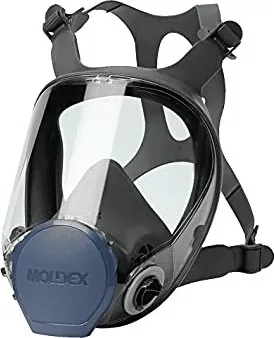
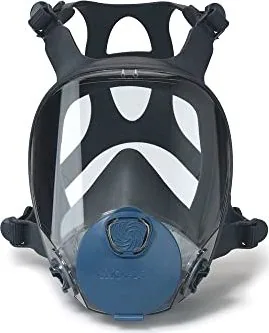
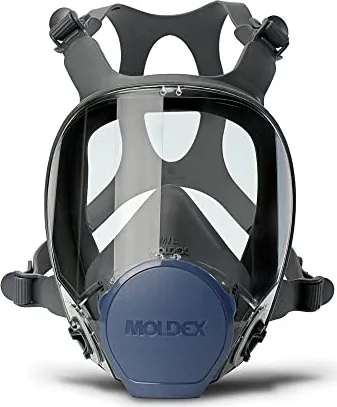
El Respirador Moldex Serie 9000 EasyLock de Cara Completa se destaca como la cúspide del equipo de protección personal diseñado para entornos industriales exigentes. Esta robusta mascarilla de cara completa ofrece una protección integral contra una amplia gama de sustancias peligrosas, incluidos gases tóxicos, vapores y materia particulada. Diseñado para cumplir con el estricto estándar EN 136:1998 CL2, asegura que los usuarios estén protegidos de contaminantes mortales mientras mantienen la comodidad durante el uso prolongado.

Una de las características destacadas de este respirador es su innovador sistema EasyLock, que simplifica el proceso de colocación y retirada de la mascarilla. Las correas de cabeza cuentan con cuatro puntos de ajuste, lo que permite un ajuste personalizado que se adapta a diversas formas faciales. El ajuste adecuado es crítico; la mascarilla debe crear un sello hermético alrededor de la boca y la barbilla sin atrapar cabello ni interferir con las monturas de los anteojos. Se aconseja a los usuarios realizar pruebas de presión negativa y positiva antes de ingresar a cualquier área contaminada para verificar la integridad del sello.

El mantenimiento y la higiene son fundamentales al utilizar protección respiratoria. El manual recomienda limpiar la pieza facial después de cada uso con agua tibia que no supere los 50 grados Celsius. Para una desinfección más profunda, se pueden emplear agentes de limpieza neutros y desinfectantes a base de alcohol. Es crucial retirar el filtro, limpiar los componentes internos de la mascarilla e inspeccionar las válvulas en busca de residuos o daños antes del almacenamiento. La mascarilla siempre debe guardarse en un entorno seco y libre de contaminación, lejos de la luz solar directa y fuentes de calor para evitar la degradación del material.

La versatilidad es otro aspecto clave de la Serie 9000. Soporta varios filtros que van desde filtros de partículas P1 que ofrecen 4 veces el Límite de Exposición Laboral (WEL) hasta filtros de gas de Clase 2 que proporcionan hasta 20 veces el WEL o 5000 ppm. Modelos específicos como el 9004, 9005 y 9006 utilizan la conexión EN 148-1 para la fijación estandarizada de filtros. Ya sea que trabaje en procesamiento químico, agricultura o respuesta de emergencia, este respirador proporciona la fiabilidad necesaria para salvaguardar su salud.

Notas Importantes de Mantenimiento

Siempre reemplace la membrana de la válvula de exhalación al menos cada cuatro años. Asegúrese de inspeccionar regularmente la copa nasal y las correas de cabeza en busca de desgaste. Si la mascarilla muestra signos de grietas, deformación o contaminación, deséchela inmediatamente. Nunca modifique la estructura de la mascarilla ya que esto anula las garantías y compromete la seguridad.

M: QW-35-FL

© Copyright 2026 Manual.ly
