Manual.ly Logo

JBL Aquaristic ProAquaTest Lab Manuale

0,0 · 0 Valutazioni

Manuale PDF · 65 Pagine

Italiano

M: QW-35-FL
pagina

/ 65

Loading...
20bbaef5bdec311f8d8e156c4e1fe9d6e449 page 9
16 17
deciency. Iron and some other trace elements are only sta-
ble in water for a limited time, even if they are bound to so-
called chelators, as is usual in modern fertilisers. In addition
any tap water added is usually iron-free. Therefore, the iron
content needs to be monitored regularly with this test and re-
plenished if necessary. Cncentrations as low as 0.1–0.2 mg/l
are sufcient for good plant growth. In very densely planted
aquariums, values of up to 0.6 mg/l can also be useful. In
marine water, values of up to 0.05 mg/l are recommended.
Procedure:
1. Rinse both test vials several times with the water to be
tested.
2. Use the enclosed syringe to ll each of the test vials with
5 ml of sample water.
3. Add 5 drops of Fe reagent to one of the two test vials and
mix by swirling. Allow to stand for 10 minutes until the
colour has developed completely.
4. Place both test vials in the grey comparator block: Place
the vial with added reagent at the smooth end and the
vial with untreated sample water (blank sample) at the
notched end of the comparator block.
5. Place the comparator block with the two test vials on the
colour chart in such a way that the notch points to the
values and move it on the colour chart until the colour of
the sample mixed with reagents corresponds as closely
as possible to the colour under the blank sample.
6. Read the iron content in the notch of the comparator.
Note:If you decide to use the JBL PRO AQUATEST NH
4
at
the same time, make sure you don’t mix up the measuring
vessels of either set. Traces of the JBL PRO AQUATEST
NH
4
left inside the measuring vessel may result in too high
readings in the iron test.
Correcting deviating values:
Too low: Fertilise with ferrous fertilisers from the JBL ferti-
liser range (e.g. JBL Ferropol).
Too high: Carry out the corresponding partial water change.
JBL PRO AQUATEST K
Features: JBL PRO AQUATEST K is an easy-to-use turbid-
ity test for the routine monitoring of the potassium content in
fresh and marine water.
Why test? Potassium is one of the macroelements which is
very effectively absorbed within a few hours and temporarily
stored by plants in fresh water. Growing plants require more
potassium compared to other elements. As a result, potas-
sium concentrations can drop to a minimum range, causing
plant growth to stagnate, even if the aquarium water is ferti-
lised regularly. Potassium deciency initially leads to chloro-
tic spots on the edges of the leaf, which gradually increase
and then turn into grey-brown necroses. The leaves may
crinkle or curl. In Central European tap water, potassium is
usually a decient element compared to in natural biotopes
and this especially applies to calcium and magnesium con-
centrations. For good plant growth, the potassium content
needs to be at around 10 mg/l, in aquariums with high il-
lumination (e.g. in so-called scapes) up to 30 mg/l can be
useful. Higher potassium values in aquarium water encour-
age the growth of green thread algae. Potassium is present
in seawater in concentrations of about 380–400 mg/l, but is
only consumed in small quantities. Excessively high potas-
sium contents can be dangerous for sensitive animals such
as shrimps. The potassium content of the aquarium water
needs to be measured on a daily basis initially. This enables
the needs of the plants to be determined and the dosage of
the fertiliser can be carried out accordingly. Afterwards, rou-
tine measurements can be carried out after longer intervals.
Procedure:
Freshwater:
1. Rinse the measuring tube (plastic) and the tube (glass)
for the potassium content reading several times with the
water to be tested.
2. Using the syringe supplied, ll 15 ml of sample water into
the measuring tube.
3. Add 10 drops of reagent 1 and mix by swirling.
4. Add 1 large level measuring spoon (broad end of the
enclosed double-ended spoon) of reagent 2 and swivel
slightly for about 30 seconds until the powder has dis-
solved. The water becomes whitish and cloudy. Leave to
stand for 1 minute and then swirl slightly again.
5. Place the glass tube for reading the potassium content
reading on the cross of the colour card.
6. The following procedure should be carried out in bright,
diffuse light. Pour the´ turbid water from the measuring
tube into the reading tube until the turbidity means the
cross on the colour card is no longer visible from above.
7. The potassium content can now be read on the scale of
the tube (bottom of the meniscus).
Marine water:
1. Fill 10 ml sample water with distilled water to 300 ml.
2. Follow the same steps as for fresh water.
3. Multiply the test result by a factor of 30.
Correcting deviating values:
Too low: In freshwater aquariums fertilise with potassium-
containing fertilisers from the JBL ProScape range. We do
not recommend an additional dosage in marine water be-
cause potassium is toxic for various organisms.
Too high: Repeat the measurement after 24 hours. If the
value is still too high, carry out the corresponding partial
water change.
JBL PRO AQUATEST Cu
Features: JBL PRO AQUATEST Cu is an easy-to-use color-
imetric test to routinely determine the copper content in fresh
and marine water aquariums, and in garden ponds. A com-
pensation method developed by JBL allows reliable results
to be obtained even in slightly discoloured water (caused by
peat ltering or disease treatment etc.).
Why test? Copper is a heavy metal which is on the one
hand indispensable as a trace element for plant and animal
organisms. On the other hand it has a devastating effect
as a cell poison (cytotoxin) above a certain concentration.
Copper mainly reaches the aquarium in tap water, as cop-
per pipes were often used for water installation. If the water
remains in such pipes for a longer period of time, consid-
erable amounts of copper can dissolve. The water in the
pipe should therefore be drained before use. For the same
reason, do not use rainwater that has owed over copper
gutters. And make sure the tools you use when setting up
your aquarium or pond are copper-free. A controlled entry
of copper takes place through the application of medications
against parasitic sh diseases, as well as with some algae-
killing agents. The copper concentrations prescribed for this
can be tolerated by sh for a certain time while parasites,
etc., start dying off immediately.
Please note: Copper quickly forms water-insoluble com-
pounds which form deposits on the ground. The JBL PRO
AQUATEST Cu only detects copper dissolved in water.
Procedure:
1. Rinse both test vials several times with the water to be
tested.
2. Use the enclosed syringe to ll each of the test vials with
5 ml of sample water.
3. Add 5 drops of reagent 1 to one of the two test vials and
mix by swirling. Then add 5 drops of reagent 2 and mix
again. Allow to stand for 15 minutes until the full colouring
develops.
4. Place both test vials in the grey comparator block: Place
the vial with added reagent at the smooth end and the
vial with untreated sample water (blank sample) at the
notched end of the comparator block.
5. Place the comparator block with the two test vials on the
colour chart in such a way that the notch points to the
values and move it on the colour chart until the colour of
the sample mixed with reagents corresponds as closely
as possible to the colour under the blank sample.
6. Read the copper content in the notch of the comparator.
Correcting deviating values:
Too low: The value should always remain below the detec-
tion limit (except for some special treatments).
Too high: Regular use of JBL water conditioners, such as
JBL Biotopol or ltering with JBL’s high performance acti-
vated carbon. Water-insoluble copper compounds can only
be eliminated by removing the complete substrate.
JBL PRO AQUATEST O
2
Features: JBL PRO AQUATEST O
2
is an easy-to-use colori-
metric test for the routine monitoring of the oxygen content
in fresh and marine water aquariums, and in tap and garden
pond water, within a range of 1–10 mg/l (ppm).
Why test? All animals living in water need oxygen to
breathe. Even the „invisible helpers“ in aquariums and
ponds, the cleansing bacteria, are dependent on a suf-
cient oxygen content for the conversion of ammonium to
nitrate. The oxygen supply they need can be safeguarded
by adequate planting. In aquariums and ponds with little or
no planting and in marine aquariums, the oxygen content
always needs to be kept at the appropriate saturation value
with the help of technical equipment. The saturation value
depends on the water temperature (see table on last page).
Plants are able to exceed this saturation value through their
assimilation activity. In well planted aquariums and ponds,
for example, values can be found towards the end of the
lighting period, which are 1 to 2 mg/l higher than the satura-
tion value.
Procedure:
1. Rinse the measuring vessel several times with the water
to be tested.
2. Fill the measuring vessel to the brim with the water to be
tested by immersing it in water and place it on a water-
proof surface.
3. Add 6 drops of O
2
reagent 1 and 6 drops of O
2
reagent
2 slowly one after the other, until the measuring vessel
overows.
4. Avoiding bubble formation, close the measuring vessel
bubble-free with the enclosed cap and shake vigorously
for approx. 30 seconds.
5. Remove the cap from the measuring vessel and add 6
drops of O
2
Reagent 3.
6. Close the measuring vessel again (bubbles no longer
matter) and shake vigorously for approx. 30 seconds. Al-
low to stand for 10 minutes until the full colouring devel-
ops.
7. Move the measuring vessel back and forth approx. 3–5
cm above the white part of the colour chart and select the
colour with the best possible match.
8. Read the oxygen content off the relevant colour eld.
Correcting deviating values:
Too low: Put in more plants and/or improve care of exist-
ing plants, e.g. by installing a CO
2
supply unit (JBL ProFlora
CO
2
kit). Improve ventilation, e.g. with a JBL ProSilent air
pump and/or improve water movement on the surface with
ow pumps, protein skimmers (marine water) or in garden
ponds with stronger pumps (pond lters) in conjunction with
a waterfall or watercourse.
Too high: Not applicable.
JBL PRO AQUATEST CO
2
Direct
Features: JBL PRO AQUATEST Ca is an easy-to-use titra-
tion test to determine the carbon dioxide content of fresh-
water.
Why test? Carbon dioxide (CO
2
) is the most important plant
nutrient. The consumption of CO
2
differs from aquarium to
aquarium and depends, amongst other things, on the fol-
lowing factors: number and demands of plants, carbonate
hardness, water movement and light. Fertilisation with CO
2
is usually done with a CO
2
fertiliser system. In the aquarium
water, a CO
2
content between 15 and 30 mg / l is recom-
mended. This range is safe for sh and at the same time en-
sures luxuriant plant growth. 20–25 mg/l CO
2
has proven to
be ideal. In special aquariums with a large number of plants,
so-called scapes, higher values of up to 35 mg/l may be re-
quired. With this test you can determine the CO
2
content of
your aquarium water in mg/l and thus monitor the setting of
your CO
2
fertiliser system.
Please note: When fertilising with so-called liquid carbon,
fertiliser monitoring with JBL PRO AQUATEST CO
2
Direct is
not possible because these fertilisers do not contain CO
2
but
other carbon compounds.
Procedure:
1. Rinse the measuring vessel and syringe several times
with the water to be tested.
2. Using the syringe, insert 20 ml of bubble-free sample
water into the measuring tubes.
3. Place the measuring tube on both elds of the enclosed
colour chart.
4. Pour 5 drops of reagent 1 into the measuring tube on the
white eld and swirl it until it is mixed.
5. Add reagent 2 drop by drop. After each drop, swirl and
count the drops until a pink colour is obtained which re-
mains stable for 60 seconds and corresponds to the col-
our in the second measuring tube on the pink colour eld.
To compare the colours, look into the tubes from above.
6. The number of drops multiplied by 2 gives the carbon di-
oxide content in mg/l. Example: 10 drops of reagent 2 =
20 mg/l CO
2
.
Since other acids in the water impair the measurement, a
blank value must also be determined. To do this, take a wa-
ter sample of 100 ml and aerate it for 15 min using a JBL
ProSilent air pump with an air stone. Then determine the
blank value according to the instructions given above.
Result–blank value = actual carbon dioxide concentration
in mg/l.
Correcting deviating CO
2
values:
Too low: Add carbon dioxide to the aquarium using a JBL
ProFlora CO
2
fertiliser system.
Too high: Aerate the aquarium using a JBL ProSilent air
pump.
CO
2
table
Special feature: The CO
2
table enables you to determine
the carbon dioxide content through the carbonate hardness
(KH) and the pH value of the water. This method should only
be used if no pH-lowering substances, such as nitrate or
peat, are in the water.
Why test?
Carbon dioxide (CO
2
) is the most important plant nutrient.
The consumption of CO
2
differs from aquarium to aquarium
and depends, amongst other things, on the following factors:
number and demands of plants, carbonate hardness, water
movement and light. Fertilisation with CO
2
is usually done
en
en
en
en
en

Chatta con il manuale del tuo JBL Aquaristic ProAquaTest Lab utilizzando l'IA

Ottieni risposte istantanee dall'IA dal manuale del tuo JBL Aquaristic ProAquaTest Lab

Chiedi qualsiasi cosa sul JBL Aquaristic ProAquaTest Lab. Le risposte provengono da questo manuale, con le pagine di riferimento.

ProAquaTest Lab Programma di manutenzione

Quotidiano
Misurare il contenuto di magnesio nell'acquario d'acqua dolce

Inizialmente misurare quotidianamente per determinare le esigenze delle piante e la dose di fertilizzante. Successivamente, passare a intervalli più lunghi.

Mostra nel manuale (pagina 3)
Quotidiano
Misurare il contenuto di potassio nell'acquario d'acqua dolce

Inizialmente misurare quotidianamente per determinare le esigenze delle piante e la dose di fertilizzante. Successivamente, passare a intervalli più lunghi.

Mostra nel manuale (pagina 9)
M: qwen/qwen3.8-flash

Fai una Domanda

0/1000

Consigli ProAquaTest Lab?

Sì No

Domande frequenti

A

Garantire risultati accurati sciacquando tutti i recipienti più volte con acqua campione prima del test. Tenere le pipette verticalmente per evitare bolle d'aria. Seguire i tempi di attesa specifici per lo sviluppo dei colori. Confrontare i colori contro la scheda su uno sfondo bianco. Usare le siringhe e i blocchi comparatori forniti per volumi costanti.

Questa risposta è utile?

A

Fluttuazioni del pH possono danneggiare gli organismi acquatici. Cambiamenti improvvisi sono particolarmente stressanti. L'acqua colorata può interferire con le letture ma i metodi di compensazione aiutano. Misurare sempre allo stesso orario del giorno perché la luce influisce sui livelli di CO2 e pH. Evitare di testare immediatamente dopo aver aggiunto prodotti chimici o cibo.

Questa risposta è utile?

A

Controllare i parametri critici come pH e ammoniaca regolarmente specialmente negli allestimenti nuovi. Testare nutrienti come nitrato e fosfato mensilmente una volta che il sistema è stabile. Controllare GH e KH settimanalmente per monitorare le tendenze della durezza. Testare i livelli di ossigeno se i pesci mostrano segni di distress o negli acquari molto densamente popolati. La frequenza dipende dalla densità di popolamento e dalle dimensioni del serbatoio.

Questa risposta è utile?

A

Sì il manuale copre acquari d'acqua dolce acquari marini e stagni da giardino. Testi specifici esistono per stagni Koi con alta densità di popolamento. La durezza generale e i test pH si applicano alla maggior parte degli ambienti di acqua dolce. I test CO2 sono specifici per acquari piantumati con cicli di crescita vegetale attivi.

Questa risposta è utile?

A

Un'alta ammoniaca indica un problema con il filtro biologico. Esegui un grande cambio parziale d'acqua immediatamente. Aggiungi batteri benefici per ripristinare il ciclo dell'azoto. Controllare se medicinali usati di recente hanno danneggiato i batteri benefici. Assicurarsi che l'alimentazione sia ridotta fino a quando i livelli tornano ai limiti sicuri. Monitorare il pH poiché influisce sui livelli di tossicità dell'ammoniaca.

Questa risposta è utile?

A

Correggere la bassa durezza carbonatica aggiungendo condizionatori d'acqua JBL contenenti idrogeno carbonato. Puoi anche usare miscele di sali minerali progettate per acquari. Evitare di ammorbidire l'acqua se è già troppo bassa. Monitorare attentamente dopo la regolazione per prevenire oscillazioni di pH. Ritestare dopo 24 ore per confermare la stabilità.

Questa risposta è utile?

A

Conservare i reagenti in asciutto a temperatura ambiente nella loro confezione originale. Tenerli lontano dalla luce solare diretta e dalle fonti di calore. Assicurarsi che le pipette siano asciutte all'esterno prima di rimetterle nelle bottiglie. Non mescolare i tappi tra diversi kit di test. Controllare regolarmente le date di scadenza perché i reagenti vecchi possono dare risultati imprecisi.

Questa risposta è utile?

M: QW-35-FL

Vantaggi e Svantaggi

Vantaggi

  • Ampia gamma di test che copre tutti i parametri chiave per diversi allestimenti acquatici inclusi acquari d'acqua dolce acquari marini e stagni da giardino
  • Tecnologia di compensazione sofisticata garantisce risultati affidabili anche in acqua decolorata da filtraggio con torba o trattamenti
  • Procedure dettagliate minimizzano l'errore dell'utente e includono aiuti visivi come schede dei colori per un'interpretazione facile delle misurazioni
  • I reagenti sono stabili ed efficaci quando conservati correttamente permettendo il monitoraggio coerente a lungo termine della chimica dell'acqua
  • Strumenti specifici forniti semplificano il processo di test rendendolo accessibile ai principianti pur rimanendo accurati per gli esperti
VS

Svantaggi

  • Alcuni test richiedono letture dei colori entro 15 minuti per garantire l'accuratezza prima che il colore della soluzione cambi
  • Gli utenti devono assicurarsi che i recipienti di test non vengano mescolati tra diversi kit di test per evitare la contaminazione incrociata dei campioni
  • La precisione dipende dal conteggio accurato delle gocce e dal mantenere le pipette verticalmente il che richiede attenzione ai dettagli
  • La correzione di alti livelli di tossine richiede spesso cambi d'acqua immediati a grande volume che possono essere invasivi
  • I reagenti possono degradarsi nel tempo se non conservati nella confezione originale lontano da fonti di calore e umidità
M: QW-35-FL

Prodotto Specifiche

Intervallo

Valori acqua

Tipo

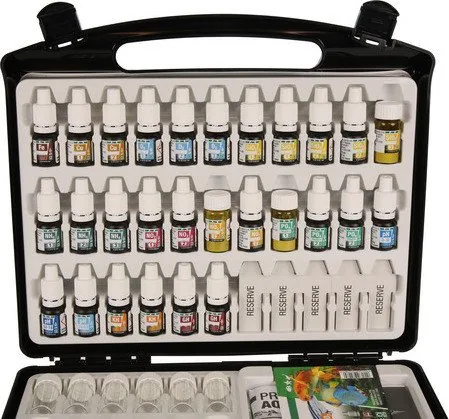
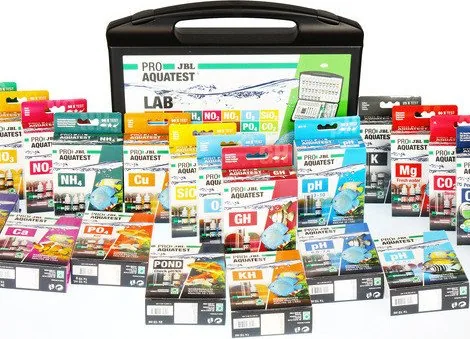
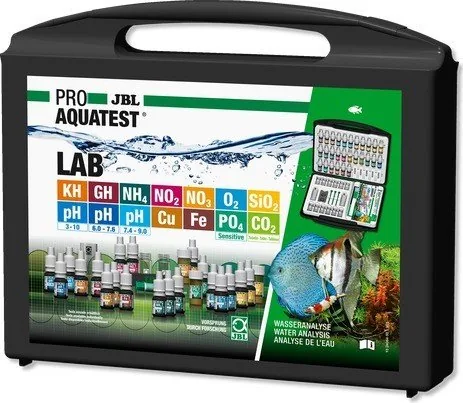
Test acqua (pH (3 intervalli), Durezza carbonatica, Durezza totale, Fosfati, Nitriti, Nitrati, Ferro, Rame, Silicati, Ossigeno, Ammonio, Ammoniaca, CO2 indiretta), Kit di test

Dimensioni

38,20x8,51x31,80cm (LxAxP)

Peso

1,27 kg

M: QW-35-FL

Descrizione del prodotto Descrizione

Padroneggiare la Chimica dell'Acqua dell'Acquario

Mantenere un ambiente acquatico sano richiede un monitoraggio preciso della chimica dell'acqua per garantire il benessere di tutti gli organismi che vivono all'interno. Il Manuale del Set Test JBL Pro AquaTest Lab fornisce indicazioni essenziali per gli appassionati che esigono eccellenza nei loro allestimenti acquatici per mantenere condizioni ottimali. Questa collezione completa garantisce che i tuoi pesci e piante prosperino in condizioni ottimali fornendo istruzioni dettagliate per vari metodi di analisi utilizzati oggi.

Metodi Essenziali di Test per la Chiarezza

La qualità dell'acqua determina il successo di qualsiasi allestimento per acquari indipendentemente dalla specifica specie che mantieni. Che tu mantenga vita marina d'acqua dolce o pesci Koi in giardini diversi parametri necessitano di attenzione specifica per la stabilità. Il manuale dettaglia metodi sofisticati di titolazione e colorimetrici progettati per accuratezza e facilità d'uso per tutti. I test di titolazione come KH e GH utilizzano conteggi precisi di gocce per determinare i livelli di durezza efficacemente nel tempo. I test colorimetrici come pH e nutrienti essenziali si basano su schede dei colori per risultati chiari e leggibili per controlli rapidi. Ogni test include procedure passo dopo passo per minimizzare l'errore dell'utente durante il processo di test dei campioni d'acqua. Il sistema compensa efficacemente la decolorazione dell'acqua causata dal filtraggio con torba o dal trattamento garantendo affidabilità anche in condizioni difficili.

Parametri Vitali Coperti per la Salute

Comprendere il tuo profilo idrico è cruciale per prevenire fluttuazioni pericolose che danneggiano creature sensibili. I test di durezza come Pro AQUATEST GH e KH prevengono pericolose oscillazioni di pH che danneggiano significativamente le creature sensibili. I livelli di pH tra intervalli specifici si adattano perfettamente a specie diverse da acqua dolce acida a serbatoi marini alcalini. Il test dei nutrienti monitora cicli complessi dell'azoto come Nitrito di Ammonio e Nitrato per tenere traccia della funzione del sistema con precisione. I livelli di Fosfato e Silicato aiutano a prevenire fioriture ostinate di alghe che possono soffocare il tuo acquario e uccidere i pesci. Elementi traccia come Ferro e Rame sono vitali per la crescita ma devono essere controllati rigorosamente per evitare rischi di tossicità. I livelli di Ossigeno garantiscono il supporto vitale per pesci e batteri mentre la fertilizzazione con CO2 favorisce la crescita rigogliosa delle piante in acquari piantumati.

Manutenzione e Correzioni per la Stabilità

Mantenere i parametri stabili evita stress ed epidemie di malattie nel tuo ecosistema nel lungo termine. Se i valori deviano dai range raccomandati la guida offre specifici passaggi di correzione per la regolazione per risolvere i problemi. La durezza troppo bassa richiede l'aggiunta di sali minerali mentre l'eccesso suggerisce l'uso della filtrazione a osmosi inversa per ridurla. Le carenze di nutrienti necessitano di fertilizzanti specifici dalla gamma ProScape disponibile per l'acquisto online facilmente. Alti livelli di tossine richiedono cambi d'acqua immediati o l'introduzione di filtri biologici per ripristinare l'equilibrio rapidamente. Le istruzioni di conservazione garantiscono che i reagenti rimangano efficaci per futuri periodi di test prima della scadenza. Le pipette devono essere tenute verticalmente per evitare bolle d'aria durante la distribuzione dei reagenti. Il monitoraggio regolare previene sorprese inaspettate nella tua routine di manutenzione per i tuoi acquari. Seguendo le indicazioni del Manuale del Set Test JBL Pro AquaTest Lab i proprietari di acquari possono ottenere chiarezza e stabilità dell'acqua per i loro animali.

M: QW-35-FL

© Copyright 2026 Manual.ly