Manual.ly Logo

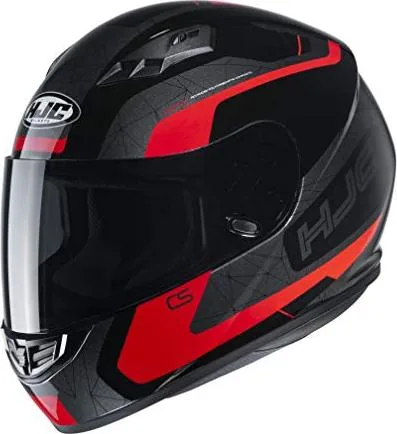
HJC CS-15 Dosta Manuale

0,0 · 0 Valutazioni

Manuale PDF · 19 Pagine

Italiano

M: QW-35-FL
pagina

/ 19

Loading...
481aa955fbdd7d8c950f542c35c469aa55de page 2
English P. 1-6 Français
P. 7-12 Deutsch P. 13-18
Español P. 19-24 Italian P. 25-30 Dutch P. 31-36
Contents
Important Safety Information
Specifications
Selecting the Right Helmet
Using Your Helmet Correctly
Inspect your helmet
To ensure that your helmet is in the best condition to maximize your protection, always inspect your helmet for damage
before riding :
• Check
the shield and shield ratchet – re-tighten shield ratchet screws if necessary. Be sure not to over-tighten any
screws. Plastic base plate screws can break and plastic screws can strip the screw sleeves if over-tightened.
• C
heck
for helmet damage. If your helmet is damaged or cracked, stop using it immediately. See “Helmet Replacement” (p. 6)
section for further information. If your helmet has been dropped, you may not be able to see the damage.
• C
heck for worn or damaged parts.
Plastic components may wear out over time. If you find worn or damaged parts, replace them
or purchase a new helmet. See “Replacement Parts” (p. 6) for information on parts replacement.
Check Your Face Shield
If your face shield is scratched or damaged it may reduce the visibility-replace if necessary.
Always make sure you can see well enough to safely operate your motorcycle.
Fasten the Retention System
Fasten the retention system (chin strap) as tight as possible under your jaw without causing pain. There must be no slack in the
strap, and the strap must be snug up against your jaw. If the retention system is not tight, your helmet may become dislodged or
knocked off in an accident.
The instructions in this manual are designed to help you select the right helmet, wear it properly, take care of it, and know when
to replace it. Failure to follow these instruction may increase your risk of serious injury or death in an accident.
In order to get the most protection possible from your helmet, you should always do the following:
• Wear your helmet when you ride;
• Handle your helmet carefully to avoid accidental damage; and
• Ride safely – do not take risks because you are wearing a helmet.
Although your HJC helmet is designed to reduce or prevent some injuries when worn, no helmet can protect you from all possible or
foreseeable impacts. For example, your helmet cannot protect you from spinal or neck injuries. In addition, there is no guarantee that your
helmet will PREVENT injuries to the area of your head that is covered. A low speed accident may even result in serious injury or death.
Never buy a used helmet or borrow someone else’s helmet. Over time the protective foam in helmets will adjust
to the contours of a user’s head. A used or borrowed helmet may not offer as much protection as a new helmet.
Wearing the wrong size helmet can increase your risk of serious injury or death in an accident. A helmet that is
too large for your head may be dislodged or knocked off in an accident. To select the right size helmet for your
head, follow these instruction :
The size chart is only for reference. Always
try the helmet on and follow this manual's
instructions for a proper fit.
Always make sure you can see well enough to safely operate your motorcycle.
To reduce the risk of serious injury or death, always use your helmet correctly.
If parts fall off while riding, your vision may be blocked which could cause an accident.
• Check the retention system (chin strap) for damage. If it is frayed or ripped, replace the helmet.
• Check that all pads are in place. Both of the cheek pads and the crown pads must be in place.
If helmet comes off or shifts over your eyes, try another size or another model or brand. You must be able
to see the edge in your upper field of vision.
Size Chart
1. Measure your head. Wrap a tape measure around your head about one inch (2.5cm) above your eyebrows.
2.
Use the sizing chart to select the helmet size that corresponds most closely to your head measurement. If your head
size falls between two helmet sizes, try on the larger helmet first and then the smaller size.
6.
Test the helmet fit by placing your hands on each side of the helmet. While holding your head as motionless
as possible, try rotating your helmet from left to right then up and down. If you can feel the helmet padding
sliding on your head, it is too big, try a size smaller. You should feel the helmet move the skin on your
head and face as you try to move the helmet.
7. F
asten the retention system (chin strap) as tight as possible under your jaw without causing pain. There must be no slack
in the strap, and the strap must be tight up against your jaw. See page 2-3.
3.
Try on the helmet by grasping both chin straps to pull the helmet completely onto your head, ensuring that the top of your head
is in contact with the top of the helmet interior.
4.
Check for a proper fit. To make sure your helmet is the right size, check that :
• The helmet inner lining fits snugly around your head.
• The top pad presses firmly on your head.
• The cheek pads contact your cheeks.
• There is no space around your brow under the inner lining. Test this by trying to insert your fingers.
If the helmet does not fit snugly, try on a smaller size.
5.
Check your field of vision when trying on a helmet. Some helmets may obstruct or block your vision when looking left, right, up, or down.
8.
Test the retention system (chin strap)
• Put your hands on the back of the helmet and try to push the helmet off by rotating it forward.
• Put your hands on the front of the helmet above your forehead (or on the chin guard) and try to push
the helmet off by rotating backward.
Repeat steps 3 throught 8 until you find a helmet that fits your head snugly and securely.
1. Outer Shell
2. Rear Venturi Exhausts
3. Impact Absorbent Liner
4. Comfort Liner
5. Rubber Edge Trim
6. Chin Strap
7. Micro Buckle
8. Front Chin Vent
9. Eyeport Gasket
10. Breath Deflector
11. Tool-less Shield
12. Shield Retention Button
13. Shield Ratchet
14. Top Front Vent
CLOSE
CLOSE
OPEN
OPEN
CLOSE
CLOSE
OPEN
OPEN
To reduce the risk of serious injury or death and to help prevent damage to your helmet :
• Never adjust your helmet accessories while riding – Only make helmet adjustments when stopped.
• Never
drop your helmet – Dropping your helmet may crack the shell or damage the protective foam. The damage may
not be visible. Your helmet is only designed for ONE impact. Refer to “Helmet Replacement” (p. 6) for more information on
what
to do
after helmet has been dropped.
• Never wear anything between your head and your helmet – this may reduce the effectiveness of your helmet.
• Never
hang or hook your helmet on anything including mirror stalks or sissy bars - Doing so may cause damage
to the helmet protective foam or liner.
• Never use
insect repellent on or around your helmet – insect repellant may damage your helmet’s shield, shell, protective
foam, or other components.
• Never
expose helmet to gasoline or gasoline fumes – Gasoline may damage your helmet’s shield, shell, protective
foam, or other components.
• Never use a dark or tinted face shield at night or in low visibility conditions.
- If you have any questions on what other substances may damage your helmet, please contact us.
• Always
wear eye protection – If you are not using a helmet with a face shield, always wear eye protection when riding.
Always lock your face shield in place when you are riding.
• Always
be alert for sounds – Your helmet may impair your hearing. However, your helmet is not a form of hearing protection.
• Always store your helmet in its helmet bag when not in use to help reduce accidental surface damage.
1 2

Chatta con il manuale del tuo HJC CS-15 Dosta utilizzando l'IA

Ottieni risposte istantanee dall'IA dal manuale del tuo HJC CS-15 Dosta

Chiedi qualsiasi cosa sul HJC CS-15 Dosta. Le risposte provengono da questo manuale, con le pagine di riferimento.

CS-15 Dosta Programma di manutenzione

Ricordami quando e' necessaria la manutenzione
Ogni 3-5 anni
Sostituire il casco

Sostituire il casco ogni 3-5 anni a causa dell'esposizione ai raggi UV e dell'invecchiamento dei componenti, anche se non sono presenti danni visibili.

Mostra nel manuale (pagina 4)
Prima di ogni uscita
Ispezionare il casco per verificare la presenza di danni

Controllare la tensione del meccanismo a cricchetto della visiera, cercare crepe nel guscio o parti usurate e assicurarsi che il sistema di ritenzione sia sicuro prima di partire.

Mostra nel manuale (pagina 2)
Regolarmente
Pulire i cuscinetti rimovibili

Lavare in lavatrice i cuscinetti rimovibili per guance e corona con sapone neutro e asciugare all'aria per rimuovere sudore e accumulo di sporco.

Mostra nel manuale (pagina 3)
Se necessario
Pulire le prese d'aria con aria compressa

Utilizzare bombolette di aria compressa per soffiare via i detriti dal sistema di ventilazione dopo aver rimosso i cuscinetti interni.

Mostra nel manuale (pagina 3)

Promemoria di manutenzione gratuiti

In base alla data di acquisto. Sempre gratuito, annulla l'iscrizione in qualsiasi momento.

Inviando, accetti l'informativa sulla privacy. Puoi annullare l'iscrizione con un clic in qualsiasi email.
M: qwen/qwen3.8-flash

Fai una Domanda

0/1000

Consigli CS-15 Dosta?

Sì No

Domande frequenti

A

Verwenden Sie warmes Wasser und milder Seife. Verwenden Sie keine Schleifmittel oder übermäßigen Druck, da dies einen glänzenden Effekt erzeugen kann, der das matte Aussehen ruiniert.

Questa risposta è utile?

A

Nein, die Modifikation des Helms durch Bohren, Schneiden oder Lackieren erhöht das Verletzungsrisiko. Modifikationen machen die Garantie ungültig und gefährden die strukturelle Integrität.

Questa risposta è utile?

A

Ersetzen Sie Ihren Helm alle 3 bis 5 Jahre aufgrund alternder Materialien. Ersetzen Sie ihn auch sofort nach jedem Aufprall, auch wenn kein Schaden sichtbar ist.

Questa risposta è utile?

A

Ja, der HJC CS-15 verfügt über einen werkzeuglosen Scheibenmechanismus, der eine einfache Entfernung und Installation ohne zusätzliche Werkzeuge ermöglicht.

Questa risposta è utile?

A

Vermeiden Sie Insektenabwehrmittel, Benzin und Benzindämpfe. Diese Chemikalien können die Scheibe, die Schale und den schützenden Schaumstoffinnenfutter beschädigen.

Questa risposta è utile?

M: QW-35-FL

Vantaggi e Svantaggi

Vantaggi

  • Erfüllt die ECE R 22-05 Sicherheitsstandards für hohen Schutz
  • Das werkzeuglose Scheibensystem ermöglicht schnelle und einfache Anpassungen
  • Das Mikro-Buckle sorgt für eine sichere und bequeme Passform des Kinnriemens
  • Abnehmbare und waschbare Wangenpolster erhalten Hygiene und Komfort
  • Aerodynamisches Design mit effektiver vorderer und hinterer Belüftung
VS

Svantaggi

  • Halbschal-Design bietet weniger Abdeckung als Vollschalhelme
  • Matte Oberfläche erfordert spezielle Reinigungsmethoden, um Glanz zu vermeiden
  • Kein eingebautes Sonnenvisier im Basismodell enthalten
  • Ersatzteile müssen echte HJC sein, um die Garantie aufrechtzuerhalten
  • Der Helm muss alle 3-5 Jahre ersetzt werden, unabhangig vom Zustand
M: QW-35-FL

Prodotto Specifiche

Tipo

Casco integrale

M: QW-35-FL

Descrizione del prodotto Descrizione

Entdecken Sie den HJC CS-15 Dosta MC1 Helm

Der HJC CS-15 Dosta MC1 in einer auffälligen Schwarz-Rot-Farbgebung ist ein vielseitiger Halbschalhelm, der für Fahrer entwickelt wurde, die sowohl Stil als auch Sicherheit schätzen. Dieses Modell verfügt über eine elegante, aerodynamische Schale, die Windgeräusche reduziert und gleichzeitig hervorragenden Schutz auf der Straße bietet. Das charakteristische MC1-Grafik verleiht dem klassischen Halbschal-Design einen modernen Touch und macht es zu einem Favoriten unter städtischen Pendlern und Wochenend-Cruisern.

Sicherheit steht im Mittelpunkt der Konstruktion dieses Helms. Er erfüllt die strengen ECE R 22-05-Standards und gewährleistet eine zuverlässige Stoßdämpfung. Das Mikro-Buckle-Sicherungssystem ermöglicht eine schnelle und sichere Befestigung unter dem Kinn, sodass der Helm auch bei plötzlichen Manövern fest sitzt. Die Gesichtsscheibe ist werkzeuglos, was einfache Anpassungen oder Austausche ohne zusätzliche Ausrüstung ermöglicht. Eine ordnungsgemäfte Belüftung wird durch vordere Kinnschlitze und hintere Auslasshöfen gewährleistet, die den Fahrer bei langen Fahrten kühl und komfortabel halten.

Der Komfort wird durch das weiche Innenfutter und die abnehmbaren Wangenpolster erhöht, die zur Aufrechterhaltung der Hygiene gewaschen werden können. Die Kopfpolsterung ist ebenfalls verstellbar und abnehmbar und ermöglicht eine angepasste Passform. Fahrer sollten immer sicherstellen, dass der Helm straff um Kopf und Wangen passt, ohne Druckstellen zu verursachen. Eine richtige Passform ist für maximale Sicherheit entscheidend; wenn der Helm leicht verrutscht oder die Sicht behindert, sollte sofort eine andere Größe ausprobiert werden.

Die Wartung Ihres HJC CS-15 beinhaltet regelmäßiges Reinigen mit zugelassenen Produkten. Bei glänzenden Oberflächen werden Autopflegemittel empfohlen, während matte Oberflächen warmes Wasser und milder Seife erfordern, um die Textur zu erhalten. Vermeiden Sie die Verwendung von Insektenabwehrmitteln oder Benzin in der Nähe des Helms, da diese Substanzen die Schale und die Visier beschädigen können. Bewahren Sie den Helm immer in seiner Tasche auf, wenn er nicht verwendet wird, um ihn vor Staub und versehentlichen Kratzern zu schützen.

Denken Sie daran, dass Helme eine Lebensdauer haben. Auch ohne sichtbare Beschädigungen ist es ratsam, Ihren Helm alle drei bis fünf Jahre aufgrund des Materialabbaus durch UV-Strahlung und Schweiß zu ersetzen. Modifizieren Sie niemals die Helmstruktur, da dies seine Sicherheitsintegrität gefährdet. Ob Sie sich für die Schwarz-Rot-Kombination oder eine andere Variante entscheiden, der HJC CS-15 bietet eine Mischung aus Leistung und Ästhetik, die für verschiedene Fahrstile geeignet ist.

M: QW-35-FL

© Copyright 2026 Manual.ly