
Manual.ly Logo

Carson Tyrann Single Blade 320 Manuale

0,0 · 0 Valutazioni

Manuale PDF · 32 Pagine

Italiano

M: QW-35-FL
pagina

/ 32

Loading...
72334901dea92b602cd5abd09530e28c6e51 page d
13 // GB
Make sure that you have sufficient insurance cover when practising your hobby or take
out a special insurance for model aircraft. The contact address for this is Deutscher
Modellfliegerverband e.V. Rochusstr. 104 – 106, 53123 Bonn.
Only a well-maintained model will function properly. Only use approved spare parts and never
improvise with any unsuitable items.
It is the user’s responsibility to ensure that the model is functioning correctly and that all nuts,
bolts and screws are tightened.
Keep the model well beyond the reach of small children. They may unintentionally activate the
model and cause themselves injury with it, or they may put batteries and small parts into their
mouths and swallow them.
Preparations
Never start flying before you have made sure of the following points:
• Pay attention to visible damage on the model, remote control, battery charger, and lithium
battery.
• Ensure that the model is functioning correctly and that all screwed and plugged connections
are fitted precisely and tightly.
• The flight battery must be fully charged and correspond to the correct voltage. Only use
new/fresh batteries for the transmitter.
• Make sure that all servos respond correctly to the signals of the transmitter.
• Always check the radio operation before starting the model.
Flight operation
The model is primarily designed for indoor flights since its low weight and unstable flight
position resulting from the construction type make it very susceptible to air movements.
Moreover, the components are not dust- and moisture-proof.
Do not fly any longer than one battery charge
Afterwards, the model must cool down for at least 5 minutes.
Then recharge the battery. Avoid deep discharge in any case.
General information
• If you have little or no experience with model aircraft you should practice with a flight
simulation program first.
• Ask experienced model pilots for advice with the fine settings of your model aircraft.
• Familiarise yourself with the control functions of your trnasmitter.
• Start your first flights, standing behind the model and looking in the flight direction. In this
case, the control reaction equals the controlling direction.
• Also familiarise yourself with the movements of the model, when it flies towards you
(response opposite to the control direction)!
Safety Precautions Lithium batteries:
1. General: Lithium batteries (accumulators) are energy storage devices with a high energy
density and can present risks. For this reason, particular care is needed when charging,
discharging, storing and handling. Read these instructions very carefully before first using the
battery. Do not fail to take note of the warning notices and instructions for use. Misuse can lead
to risks such as explosion, overheating or fire. Failure to observe the instructions for use leads to
early failure and other defects. The instructions should therefore be kept in a safe place and it is
essential that they are handed over to the second user if the batteries are passed on.
2. Warning notices:
• Avoid short-circuits. A short-circuit may well destroy the product. Cables and connections
must be well insulated.
• It is essential when connecting the battery to ensure that the polarity is correct.
• Original plug connectors and cables may not be cut off or changed - if need be, use an
adapter cable.
• Do not expose the battery to excessive heat or cold or to direct sunlight. Do not throw in the
fire. Do not place the battery in contact with water or other liquids.
• Charge the battery only with charging units intended for the purpose and always use the
balancer connection. It is only by using the balancer connection that optimum charging can
be ensured. If this connection is not used, charging is subject to the risks mentioned above.
Before charging, always first allow the battery to cool to ambient temperature. Never charge
while hot.
• When charging, place the battery on a non-flammable, heat-resistant support. There should
be no flammable or readily ignited objects in the vicinity of the battery.
• During charging or operation, never leave the battery unsupervised.
• Do not fail to keep to the recommended charge/discharge current.
• The battery casing must not be damaged. It is essential to avoid damage by sharp objects
such as knives or the like, from dropping, impact, bending etc. Damaged batteries may no
longer be used.
• Batteries are not toys. They should be kept away from children.
3. Charging instructions: Lithium batteries are charged according to the CC-CV procedure.
CC stands for “constant current“, which is applied during the first phase of charging. Once the
battery reaches the maximum voltage configured in the charger, it switches to CV (constant
voltage) for the second phase of charging. The battery voltage no longer increases. The charging
current now falls continuously until the battery is fully charged. The maximum charging current
for the battery is 1C (C=nominal capacity of the battery, e.g. for a battery with a nominal
capacity of 2700 mA, the maximum charging current for the battery is 2700 mA (2.7 A)). Never
charge several batteries together from a single charger. Differing states of charge and capacities
can lead to overcharging and destruction.
4. Storage instructions: Lithium batteries should be stored charged to 20-50 % of their
capacity and at a temperature of 15-18 °C. If the cell voltage falls below 3 V, they should be
recharged. Deep discharge and storage when discharged (call voltage <3 V) will render the
battery unusable.
5. General terms of guarantee: There is a legal guarantee for production and material faults
as applicable at the time of dispatch. No liability is accepted for normal wear and tear. This
guarantee does not apply for defects attributable to improper use, inadequate maintenance,
third-party interference or mechanical damage. This applies, in particular, to used batteries
and batteries clearly showing signs of use. Damage and loss of performance due to improper
handling and/or overload are not product faults. Batteries are consumables and subject to a
certain ageing. This is influenced by factors such as the charge/discharge currents, the charging
procedure, the operating and storage temperatures and the state of charge during storage.
The ageing shows itself in, among other things, an irreversible loss of capacity. In the model
field, where batteries are frequently used to supply motors, very high currents can flow from
time to time.
6. Exclusion of liability: Since we are unable to have any control over charge/discharge, handling,
compliance with assembly and operating instructions, battery replacement and its care and
maintenance, Tamiya / Carson can accept no liability for loss, damage or costs incurred. Any claim
for damages that may result from operation, failure or faulty operation or that is in any way related
thereto will therefore be refused. We accept no liability for personal injury or material damage and
their consequences that arise from our delivery.
7. Disposal instructions: Batteries are hazardous waste. Damaged or unusable cells must be
disposed of in the correct manner.
No liability for printing errors, we reserve the right to make changes!
SAFETY PRECAUTIONS LITHIUM BATTERIES

Chatta con il manuale del tuo Carson Tyrann Single Blade 320 utilizzando l'IA

Ottieni risposte istantanee dall'IA dal manuale del tuo Carson Tyrann Single Blade 320

Chiedi qualsiasi cosa sul Carson Tyrann Single Blade 320. Le risposte provengono da questo manuale, con le pagine di riferimento.

Tyrann Single Blade 320 Programma di manutenzione

Prima di ogni volo
Ispezionare il modello per danni visibili

Controllare il modello, il telecomando, il caricabatterie e la batteria per eventuali danni visibili prima di ogni volo.

Mostra nel manuale (pagina 13)
Prima di ogni volo
Stringere tutte le viti e i collegamenti

Assicurarsi che tutti i collegamenti a vite e a spina siano precisi e ben serrati prima del volo.

Mostra nel manuale (pagina 13)
Prima di ogni volo
Verificare la risposta dei servi

Accertarsi che tutti i servi rispondano correttamente ai segnali del trasmettitore prima di avviare il modello.

Mostra nel manuale (pagina 13)
Prima di ogni volo
Controllare la portata radio

Controllare sempre il funzionamento della radio e la sua portata prima di avviare il modello.

Mostra nel manuale (pagina 13)
Dopo ogni volo
Lasciare raffreddare il modello per 5 minuti

Non volare per più di una carica della batteria. Lasciare raffreddare il modello per almeno 5 minuti dopo il volo.

Mostra nel manuale (pagina 13)
Secondo necessità
Sostituire le pale danneggiate dell'elica

Le pale danneggiate dell'elica o del rotore devono essere sostituite immediatamente. Non tentare di ripararle.

Mostra nel manuale (pagina 12)
M: qwen/qwen3.8-flash

Fai una Domanda

0/1000

Consigli Tyrann Single Blade 320?

Sì No

Domande frequenti

A

C'è una garanzia di 24 mesi contro i difetti di fabbricazione valida dalla data di acquisto da un rivenditore autorizzato.

Questa risposta è utile?

A

È progettato principalmente per l'uso interno. Il volo esterno richiede nessun vento per prevenire la perdita di controllo a causa del peso leggero.

Questa risposta è utile?

A

La batteria LiPo richiede tipicamente da uno a due ore per la ricarica completa utilizzando il caricatore USB incluso.

Questa risposta è utile?

A

I bambini sotto i sedici anni dovrebbero operare solo sotto supervisione adulta poiché non è classificato come giocattolo.

Questa risposta è utile?

A

Consenti al motore di raffreddarsi per almeno cinque minuti prima di tentare di volare di nuovo il modello.

Questa risposta è utile?

A

Sì, puoi passare tra Modalità 1 e Modalità 2 usando le impostazioni del trasmettitore prima di decollare.

Questa risposta è utile?

A

L'assicurazione è spesso richiesta per legge per gli aerei radiocontrollati a causa dei rischi operativi coinvolti.

Questa risposta è utile?

M: QW-35-FL

Vantaggi e Svantaggi

Vantaggi

  • Pronto al volo fuori dalla scatola senza assemblaggio
  • Giroscopio integrato per un comportamento di volo stabile
  • L'illuminazione LED migliora la visibilità durante il volo
  • Include funzione automatica di decollo e atterraggio
  • Telecomando 2.4 GHz previene interferenze
VS

Svantaggi

  • Progettato principalmente per uso interno a causa della sensibilità al vento
  • Breve durata di volo per singola carica della batteria
  • Richiede supervisione adulta per operatori sotto i 16 anni
  • Il motore richiede tempo di raffreddamento tra sessioni di utilizzo
  • Copertura assicurativa spesso obbligatoria per operazione
M: QW-35-FL

Prodotto Specifiche

Tipo

Elicottero

Frequenza

2,4 GHz

Motore

Motore Elettrico

Tempo di Volo

18 min

Dimensioni

32,00x24,99x8,00 cm (Lunghezza x Larghezza x Altezza)

Peso

53,01 g

M: QW-35-FL

Descrizione del prodotto Descrizione

Sperimenta la gioia del volo con il Carson Tyrann Single Blade 320

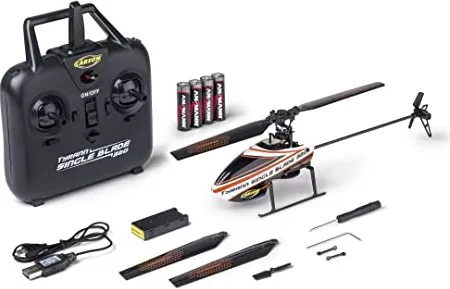
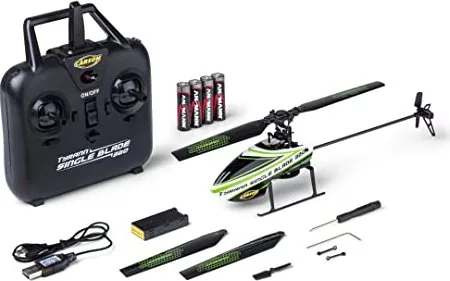
Acquistare un nuovo modello telecomandato è sempre un momento emozionante per gli hobbisti che desiderano esplorare i cieli. Il Carson Tyrann Single Blade 320 si distingue come un'entrata robusta nel mondo della robotica aerea. Questa unità è progettata per un'operazione immediata, pronta per volare appena uscita dalla scatola senza richiedere un complesso lavoro di viti. Gli utenti apprezzano la comodità dell'assemblaggio completo che minimizza significativamente i tempi di configurazione. Puoi trovare tutti i dettagli tecnici necessari e le istruzioni precise consultando il Manuale Carson Tyrann Single Blade 320 trovato nel pacco per garantire un'operazione corretta ogni singola volta. Il sistema di telecomando 2.4 GHz garantisce una connessione stabile durante i tuoi voli senza interferenze. Include funzioni come il controllo automatico dell'altezza e un giroscopio integrato per la stabilizzazione. Questo rende la curva di apprendimento molto più fluida rispetto ai precedenti modelli senza spazzole. L'illuminazione LED consente una migliore visibilità, specialmente quando si vola al crepuscolo o in ambienti interni a bassa luminosità. Inoltre, il trasmettitore offre impostazioni Modalità 1 e Modalità 2, permettendo ai piloti di scegliere la configurazione dell'acceleratore preferita per l'uso con destra o sinistra.

La sicurezza è fondamentale quando si utilizza qualsiasi dispositivo volante. Il design è più adatto agli ambienti interni perché la costruzione leggera lo rende altamente sensibile alle condizioni di vento esterni. Si consiglia agli utenti di utilizzare il dispositivo in stanze spaziose libere da ostacoli come i mobili. Quando si vola, assicurati sempre di essere su una superficie piana e monitora attentamente i livelli della batteria per evitare incidenti. La batteria LiPo inclusa richiede protocolli di ricarica specifici per mantenere la longevità e prevenire rischi per la sicurezza durante i cicli di ricarica. Assicurati che tutte le viti e le connessioni siano strette prima di tentare il volo per mantenere la stabilità. La tensione della batteria deve corrispondere a specifiche corrette per la gamma di trasmissione ottimale. Se il modello non risponde ai comandi, controlla prima la tensione della batteria. Il surriscaldamento del motore indica la necessità di un periodo di raffreddamento prima di ulteriori utilizzi. Non volare in vento forza maggiore di uno per mantenere il controllo.

Note Importanti sulla Manutenzione

Controlli regolari delle pale del rotore e della risposta del servomotore sono essenziali per un'operazione sicura ogni stagione. Sostituisci sempre le eliche danneggiate immediatamente per prevenire l'instabilità durante le modalità di hover. La garanzia copre i difetti di fabbricazione per due anni se acquistato da un rivenditore autorizzato. Sii consapevole che l'assicurazione è richiesta per l'operazione come per le linee guida legali locali riguardanti gli aerei telecomandati. Evita la scarica profonda delle celle della batteria per estendere la durata complessiva. Mantieni il modello fuori dalla portata dei bambini piccoli di età inferiore a sedici anni. Segui sempre le linee guida trovate nella documentazione per non invalidare le richieste di garanzia. La ricarica richiede circa uno o due ore utilizzando il caricatore USB. Ricarica solo quando il modello è completamente raffreddato per prevenire danni alle celle al litio.

M: QW-35-FL

© Copyright 2026 Manual.ly